Industry’s Spin on Climate Change

An excerpt from Climate Myths: The Campaign Against Climate Science (Northbrae Books, 2013)

Screen Shot 2013-08-01 at 12.00.00 PM

The fossil fuel industry often works through proxy organizations and individual climate skeptics, who generally have no credibility on climate issues but who are good at shaking public confidence in the conclusions of climate science to paralyze the policy making process.

The Greening Earth Society was one such organization. You might think from its name that it was an environmentally oriented group. But no, The Greening Earth Society was a creation of the Western Fuels Association, a $400 million coal producer co-op.

From its website (www.greeningearthsociety.org), this benevolent-sounding “green organization” served as a gateway to coal, oil, and mining industry-funded think tanks and institutes as well as to publications rife with misinformation. Some of the materials circulated by the “Just Say ‘No’ to Climate Change” folks even targeted elementary school children through their teachers.

When I last searched for http://www.greeningearthsociety.org in 2008, the website was no longer operational. However, at the Western Fuel Association’s website, I found a link to the Center for the Study of Carbon Dioxide and Global Change, whose website denies a connection between the Earth’s recent warming and increased atmospheric carbon dioxide.

C.D. Idso and K.E. Idso’s 1998 treatise, “Carbon Dioxide and Global Warming: Where We Stand on the Issue” was prominent on the Center’s website, http://www.co2science.org, in June 2008. “Atmospheric CO2 enrichment brings growth and prosperity to man and nature alike,” they claimed; translation: global warming is good for nature and humanity. Co-author Craig D. Idso, is the Center’s founder and former president and he’s the former Director of Environmental Science at Peabody Energy Company. Peabody is the world’s largest private coal company, fueling 10 percent of all U.S. electricity generation.1

Climate skeptics have played a critical role in the coal and oil industries’ efforts to foster doubts about climate science and fears of an economic meltdown. Although the skeptics present themselves to the public as independent scientists or respected climate experts, most of the best known of these “objective thinkers” have taken significant amounts of energy industry money for themselves or their organizations, and they espouse scientifically dubious positions.

Prominent examples include Dr. S. Fred Singer, funded at times by Exxon, Shell, Unocal, ARCO, and Sun Oil; Dr. Pat Michaels, recipient of at least $165,000 from coal and other energy interests; Dr. Richard Lindzen of MIT, who has received money from the Western Fuels Association; and climatologist Dr. Robert Balling of Arizona State University, whose work received over $300,000 from coal and oil interests.2

Individuals like these, supporting views far outside main- stream climate science, have paraded before the media, their presence falsely suggesting a pervasive disagreement among climate scientists and obscuring their wide consensus. At times, climate skeptics have recycled discredited scientific opinion on the assumption that the public would be unable to sort out the truth.

In doing so, they enjoyed a great advantage. Unwary or irresponsible members of the press have often given these erratic views equal time with those of responsible, reputable climate scientists, creating the false impression that the basic ideas of climate science are widely disputed. Uninformed readers and listeners might be inclined to regard both sides of the make-believe controversy as equally credible, and “split the difference,” since one side said there was a serious problem and the other side claimed there was none.

For an example of just how irresponsible a newspaper can be in publishing nonsense about climate change, see, “Science Has Spoken: Global Warming is a Myth,” which appeared in The Wall Street Journal on December 4, 1997. Its authors, chemist Arthur Robinson and his son Zachary, ran the tiny Oregon Institute of Science and Medicine outside Cave Junction, Oregon, from which they marketed nuclear bomb shelters and home-schooling advice.

Relying on the mistaken claim that changes in solar activity explain the Earth’s increase in temperatures since the Little Ice Age, the article concludes, “There is not a shred of persuasive evidence that humans have been responsible for increasing global temperatures.” The article then advises readers not to worry “about human use of hydrocarbons warming the Earth.”

“Carbon dioxide emissions have actually been a boon for the environment,” the article states. “Our children will enjoy an Earth with twice as much plant and animal life as that with which we are now blessed. This is a wonderful and unexpected gift from the Industrial Revolution.”3

Another attempt to cloak the climate disinformation campaign in the trappings of science was a “Global Warming Petition” supposedly signed by 17,000 U.S. scientists, but whose names were published without any identifying titles or affiliations. (The list included author John Grisham, several actors from the TV series M*A*S*H*, and a Spice Girl.) The petition was circulated by none other than Dr. Robinson’s Oregon Institute of Science and Medicine.

With the petition came a bogus “eight-page abstract of the latest research on climate change,” formatted to look like a pub- lished scientific article from the prestigious Proceedings of the National Academy of Sciences, with which it had no connection.

Filled with misinformation and put together by the Robinsons and two coauthors affiliated with the George C. Marshall Institute, the tract was accompanied by a letter of endorsement from the late Dr. Frederick Seitz, a former pres- ident of the National Academy of Sciences in the 1960s, who contended that “global warming is a myth.” Dr. Seitz was a physicist, not a climatologist, and in the opinions of at least two very prominent scientists, “has no expertise in climate matters.” He had been, however, “one of the last remaining scientists who insist that humans have not altered the stratospheric ozone layer, despite an overwhelming body of evidence to the contrary.” Dr. Seitz’s views illustrate that expertise and professional distinction, even in physics, does not insure good judgment in another area of science and policy.

1.  Samuel Thernstrom, “Beyond Kyoto,” The American, September 27, 2007.

2.  David Callahan, National Committee for Responsive Philanthropy, “$1 Billion for Ideas: Conservative Think Tanks in the 1990s” (Portola Valley, CA.: The Commonweal Institute, 1999).

3.  “Patrick J. Michaels, Cato Institute: Policy Scholars” (Washington, D.C.: The Cato Institute, 2010), http://www.cato.org/ people/patrick-michaels.
The Climate Emergency

This article has been featured in several publications in July 2013.  © Copyright 2013 by John J. Berger
Image via WikiMedia Project.

Without requiring deep cuts in greenhouse gas emissions or emergency measures to combat climate change, President Obama’s comprehensive new Climate Action Plan nonetheless recognizes the damage that climate change is already doing to the American way of life.

While the American public—divided as it is over climate change—would not yet broadly support emergency measures, the nation is indeed already in the grip of a global climate emergency. Thus the energy efficiency, clean energy, and preparedness strategies the President has put on the table are desperately needed.

An emergency has two basic components: it presents a grave threat to life, liberty, property, or the environment, and the situation requires immediate action. Climate change is obviously already doing grave damage to the Earth, and it threatens to do even more harm, per numerous studies. Thus it satisfies the first condition.

Because damage to the climate is essentially irreversible on time scales of interest to present generations, immediate action is necessary before further irrevocable harm is done. Thus the second condition for an emergency is met.

Data from the World Health Organization indicates that over the past 35 years, more than 5 million people have already died from increases in disease and malnutrition brought on by climate change.

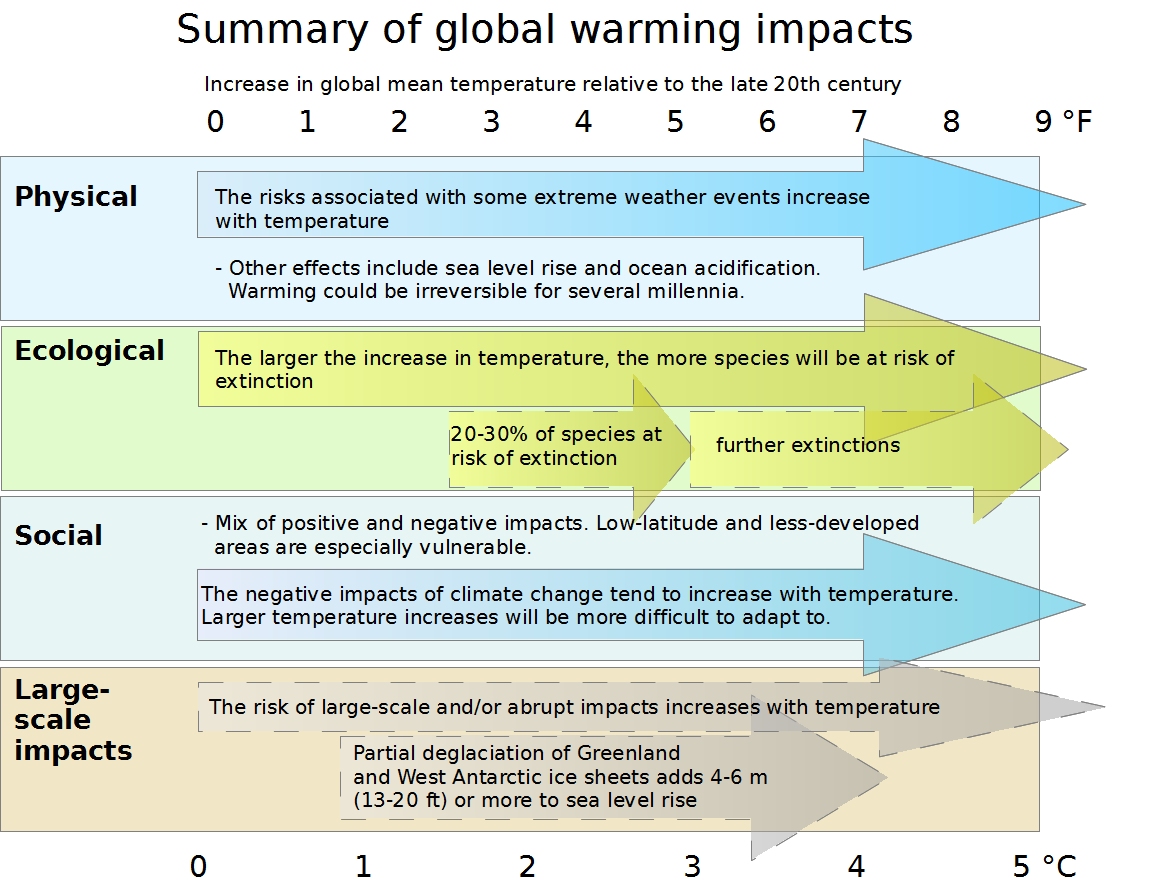
These climate casualties have occurred even though the world has only warmed about 1.4° F since the dawn of industrialization. The future is far more menacing.

If we continue heating the world at the current escalating rate, billions of people will neither have enough water nor sufficient reliable, affordable food supplies, and tens of millions of environmental refugees will be on the move, hungry, sick, and desperate. This is a recipe for increased conflict and chaos in many parts of the world.

The warming to date is but a fraction of the heating that is already in store for us.  Even if heat-trapping gas emissions (largely CO2) miraculously fell to zero tomorrow, the atmosphere will get another 1–2° F degrees hotter, just from excess heat already absorbed by the oceans due to human activities so far.

But rather than curtailing emissions as much as possible, we’ve done the opposite.  The world’s emissions of heat trapping gases increased 58 percent between 1990 and 2012. We are now on track to increase global average temperatures by some 7° – 11° F by 2100.  Some experts are projecting that 7° F could be reached by 2060 – 2080.

Such temperatures haven’t been seen on this planet in 5 million years. And those average temperatures would be roughly doubled in the continental interiors of the Earth’s land masses.

In the over-heated world only a few decades from now, up to 30 percent of the world would be in drought at any given time, up from one percent today. Moreover, an estimated 50 percent of land where crops now grow would become unsuitable for crops.

Even a temperature increase of 3.6° F would make our planet hotter than at any time in the past 800,000 years. Eventually that could drive the Earth’s climate past various “tipping points” at which “positive feedback” generated by the climate system itself initiates an unstoppable warming cycle beyond human control.

Climate change has already had an enormous impact.  For example, the frequency and severity of extreme weather events has greatly increased, just as climate science has predicted. Although no single weather event can be conclusively proven to result from climate change, financial losses from weather-related disasters are up sharply, setting global records.

Superstorm Sandy, Hurricane Mitch, Hurricane Katrina, and others collectively killed thousands, left millions homeless and caused damages approaching $200 billion.

The European heat wave of 2003 killed 35,000 people and did $15 billion in damage to agriculture alone.  The 2010 Russian heat wave killed 55,000 people and produced massive crop damages.

While heat waves like the European disaster were formerly expected only once in 500 years, such heat waves may become fairly common in the overheated world we’re now creating.

The President’s Climate Action Plan overall deserves our enthusiastic support, but it is still an early palliative step on the path to stabilizing the climate. If successful, it would just bring U.S. emissions roughly back to where they were in 1990 when we were the world’s largest carbon polluter, and it proposes only $8 billion for “clean energy technology across all [Federal] agencies.”

Yet the climate emergency today is even more threatening in fundamental ways to our long-term security than the terrorism and conventional military threats, on which we spend hundreds of billions a year, or the financial crisis of 2008, when the Federal Reserve committed $7.7 trillion to bailout troubled banks.  The climate emergency, too long neglected, needs to become a top financial as well as political priority.  Humanity’s deadliest common enemy is rapid and uncontrolled global climate change.

Pathways to 100 Percent Renewable Energy

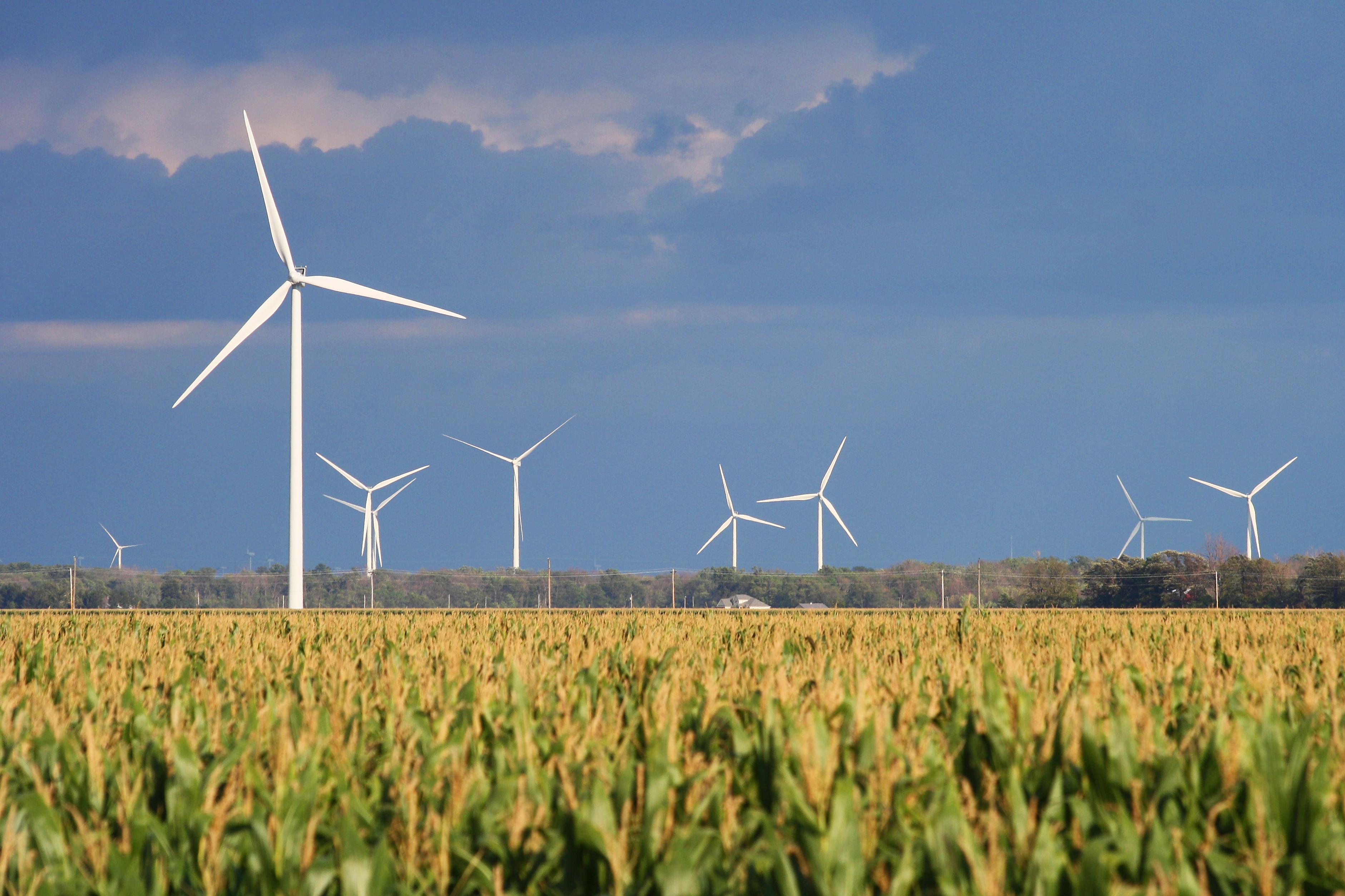
Windmills over cornOriginally published in Renewable Energy World on April 30th, 2013.  © Copyright 2013 by John J. Berger
Image via MorgueFile

Reaching the goal of getting 100 percent of the world’s energy from renewable resources is technically and economically feasible today. The challenges lie in the realms of public policy and political will, as well as in finance, market development, and business development.

That was the message delivered by numerous distinguished energy experts in San Francisco on April 16th at Pathways to 100 Percent Renewable Energy, the first international conference specifically focused on accelerating the transition to 100 percent renewable energy.

Citing a number of recent authoritative energy studies, Dr. Dave Renne, President of the International Solar Energy Society said all the studies agree that there are no technical barriers to getting 100 percent of our energy from renewable resources. Their technical potential, he said, “far exceeds even our wildest future (demand) projections.”

Some renewable technologies in themselves are sufficient to supply 100 percent of the world’s energy demand by themselves, though of course this would not be an optimal global energy solution. Professor Alexa Lutzenberger from the University of Leuphana, Germany noted that the world could meet 100 percent of its energy needs just from biomass fuels and biogas.

This versatile fuel can be used to produce power, or power and heat in a combined heat and power plant. It can also be used to produce biodiesel or other fuels, such as biomethane and bioethanol. When cleaned, biogas can utilize the world’s vast natural gas pipeline infrastructure.

Germany now has some 8,000 mostly small agricultural biogas plants which afford farmers the opportunity to become energy independent and enjoy relatively stable, reasonably priced energy.

100 Percent Renewables Possible for the Planet

Marc Z. Jacobson, a professor of civil and environmental engineering discussed his landmark 2009 feasibility study for completely powering the planet with “wind, water, and solar (WWS).”

Jacobson said that 2.5-3 million people die prematurely from fossil fuel air pollution worldwide each year and that cumulativly, 100 million people have perished from air pollution over the past 100 years.

Referring to climate change, growing global population, rising energy demand, and air pollution, Jacobson said, “These are drastic problems, and they require drastic solutions.”

He found that by producing 100 percent of the planet’s energy from a mix of wind, concentrating solar, geothermal, tidal power, photovoltaics, wave power, and hydroelectricity, air pollution deaths would be eliminated along with the emission of climate-disturbing greenhouse gases generated from fossil fuels.

Global energy use would also decline sharply. Just by replacing the fuels in the global energy mix with electricity, Jacobson found that total energy demand would decline 32 percent by 2030, even without accounting for energy efficiency measures that would also be adopted.

In the U.S., the study found that a similar shift to electricity and electrolytic hydrogen would cut primary energy demand by 37 percent, also before other efficiency measures. The switch would reduce California’s energy demand by 44 percent, largely as a result of converting the transportation sector to more efficient electric propulsion.

Jacobson did not recommend nuclear power, coal with carbon capture, natural gas, or biofuels that involve combustion and may release air pollutants and carbon dioxide.

Under the plan’s assumptions, electricity costs would fall compared with fossil fuel power and more new jobs would be created than lost in the energy transition. Global energy security and price stability would both be vastly enhanced and the renewable facilities needed would require only 0.4% of the world’s land.

New York

Jacobson also reported on a new Stanford University study he led recently which contends that it would be technically and economically feasible for New York State to get all its energy from renewable sources by 2030. RenewableEnergyWorld.com reported on that study here and there is an active discussion following the article. Jacobson said that, if implemented successfully, the plan would save money, energy, and create jobs while reducing the health impacts and costs of air pollution in New York.

Renewables in California

Also at the conference, Stephen Berberich, President and CEO of the California Independent System Operator Corp. said that today’s power industry won’t be recognizable by 2050. The vast majority of the state’s energy demand will by then be met by renewable energy, and the utility industry will be completely transformed.

Many homes will be effectively off the grid, doing their own generation, and using their own energy storage systems. Berberich expects that the largest power consuming sector in the California economy in 2050 will likely be the state’s transportation fleet, which by then will be electrified to reduce its greenhouse gas emissions.

Berberich said that the move to renewables will be driven by economic imperatives, the development of new technology, and concern over climate change. “The costs of distributed technologies are falling dramatically.”

Berberich himself said he pays about 35 cents per kilowatt-hour for electricity at his home in the PG&E service territory but that he can get a solar array for 20 cents a kilowatt-hour. “Why wouldn’t I do that?” he asked.

Customers in the future will enjoy transparent pricing and, with the help of online applications and advanced networking devices, “will be able to see, shape, and control their energy usage,” he said.

During the transition to a renewable energy powered economy, Berberich cautioned that ramping renewables up too quickly could drive costs up and provoke a backlash. “If a rate bomb goes off, there’s going to be a hue and cry,” he warned. Likewise, problems with system reliability would also undermine progress toward 100 percent renewable energy.

Dr. Eric Martinot, senior research director at the Institute for Sustainable Energy Policies provided the conference with a summary of the Renewables Global Futures Report produced by REN21, a global, multi-stakeholder network of experts from many sectors of society, seeking to accelerate the global transition to renewable energy.

Based on the opinions of 170 leading experts and 50 energy scenarios, the report forecasts rapid increases in global investment in renewable energy supply, accompanied by continued declines in cost and advances in technology. Global investment in renewable energy was $260 billion in 2011 and, according to the report, may reach $400-500 billion by 2020.

While recognizing that challenges remain in integrating renewable energy into utility power grids, buildings, transport, and industries, the report concludes that the primary challenges, “relate to practices, policies, institutions, business models, finance,” and other factors.

The report takes note of a growing number of regions, cities, towns, and communities that are planning to eventually become 100 percent reliant on renewable energy. Rather than expecting renewables just to fit within modestly restructured existing energy systems, it envisions the co-evolution of renewable technologies over time into profoundly transformed new energy systems.

More information about the Pathways to 100 Percent Renewable Energy conference and its sponsor, the Renewables 100 Policy Institute, can be found at www.go100percent.org. Organizers are planning to post videos of the conference on the website in the near future.

Atmospheric CO2 Rises to 400 Parts Per Million. Origin of the Extra Gas No Mystery

Atmospheric COS levels reach 400ppm (parts per million) in May 2013

Image via MorgueFile

As you may have heard, the CO2 concentration in Earth’s atmosphere has now risen to 400 parts per million (ppm). Although the media has covered this story and pointed out that “this is the first time in human history that atmospheric CO2 has reached this level,” they have in general failed to explain how we know that the extra atmospheric CO2 is from fossil fuel burning rather than from natural causes.

Without such an explanation, the door stands open for climate science doubters to ask, what proof do we have that the CO2 actually came from fossil fuels? All kinds of noxious gases erupt from below ground. Maybe the extra CO2 came from the Earth’s mantle by way of volcanic eruptions. Sounds reasonable . . .

But if you want a ready answer to this plausible sounding objection, you can find it in my recent book, Climate Myths: The Campaign Against Climate Science (Northbrae Books, 2013), in which this and other spurious arguments by climate science deniers are dispelled. As Myth #3 states (from Climate Myths):

Carbon in the form of carbon dioxide is released from the Earth’s mantle into the atmosphere through volcanic hot spots, volcanic subduction zones (places where the great plates of the Earth’s crust dive beneath each other), and through midocean ridges.

The element carbon has three naturally occurring isotopes. Isotopes are related forms of the same element. They behave the same chemically and differ only in mass. The isotopes of carbon are carbon-12, carbon-13, and carbon-14. They occur in nature in known ratios.

Carbon-12 is by far the most common, accounting for almost 99 percent of all the carbon on Earth. Most of the other 1 percent of the carbon is carbon-13. Unlike carbon-12 and carbon-13, which are stable, carbon-14 is radioactive and extremely rare in nature.

Plants preferentially utilize the lighter carbon-12, and so carbon derived from fossil fuels—which are largely formed from dead, decayed, and compressed ancient plant matter—have a higher carbon-12 to carbon-13 ratio than carbon from other sources. Fossil fuels—being derived from the decayed remains of ancient plants—have the same carbon isotope ratio as plants. Thus the increase in this ratio that has been detected in atmospheric carbon dioxide samples over time confirms that the carbon dioxide increases of concern are coming from the burning of fossil fuels and other plant material, rather than from an increase in outgassing from the Earth’s mantle.

Although the outgassing of the Earth’s mantle has released vast quantities of carbon dioxide since the planet’s formation billions of years ago, the outgassed carbon dioxide does not exhibit an enrichment in carbon-12. It therefore cannot account for the enrichment of carbon-12 found in the atmosphere.

The outgassing of the Earth’s mantle as it relates to climate and atmospheric chemistry is explained much more fully in the Intergovernmental Panel on Climate Change’s Working Group I Report and is also well explained on the award-winning science website, http://www.Realclimate.org.

Yet another type of information supports the conclusion that the recent increase in the atmosphere’s carbon dioxide content is being caused by the burning of fossil fuels and the destruction of forests. It is corroborated by data on how much fossil fuel has been burned and how many tons of carbon-containing forests have been destroyed.

The tonnage of carbon dioxide in the atmosphere corresponds well to the quantity of carbon dioxide generated by the burning of fossil fuels and forests (some 500 billion metric tons) minus the Earth’s well-understood natural carbon dioxide removal processes, just as it clearly does not correspond to any outgassing of carbon dioxide from the Earth’s mantle.

To sum up, based on reasonable scientific approximations of the quantity of carbon dioxide added and removed from the atmosphere, it’s possible to calculate the concentration of carbon that would be expected in the atmosphere if the source of the increase were the burning of fossil fuels and clearance of forest. Sure enough, these estimates are in close agreement with the actual concentration of carbon dioxide in the atmosphere, which as of mid-2012 was 394 ppm [And is now 400ppm].

Biodiversity Loss: Getting the Point Across

by John J. Berger, Ph.D and Lani Maher

According to a report by Dr. Peter Raven, President of the International Botanical Congress, the current extinction rate is now approaching 1,000 times the background rate and may climb to 10,000 times background during the next century, if present trends continue. At the latter rate, one-third to two-thirds of all the Earth’s species will be lost in the next 200 years. Raven also states that vast numbers of unknown plants, animals, and other organisms are currently being lost before they are even recognized. Only about 1.6 million organisms out of a conservatively estimated 7-10 million in existence have been scientifically identified.

Forest ecosystems provide much of the world’s overall biodiversity and are therefore a main focus of efforts to conserve biodiversity. While biodiversity is important for the survival of species and ecosystems, it is also important for human survival. Not only are we dependent on the environmental services provided by ecosystems, but we also depend on medicines derived from forests. Those medicines account for forty percent of all commercially sold pharmaceutical preparations, and many more have yet to be discovered. The importance of biodiversity to our everyday lives also has yet to be fully conveyed to the public.

Most ecologists and biologists agree that biodiversity is a key factor in determining an ecosystem’s resilience, adaptability, and chances of long-term survival. Similarly, worldwide biodiversity loss is often in the forefront of climate change and deforestation discussions. However, when it comes to international treaties and environmental policymaking, biodiversity conservation has not been appropriately prioritized, says David Dickson, Director of the Science and Development Network (a not-for-profit organization dedicated to providing information about science and technology for the developing world). Dickson believes that the disparity may be due primarily to a lack of clear and constant communication between scientists, policymakers, and the public.

Efforts to conserve biodiversity “face formidable challenges in persuading political leaders and the public of the urgent need to take action,” Dickson says. “[A]t root is the conflict between the need to radically change our use of natural resources and the desire to maintain current forms of economic growth in both developed and developing countries.”

While compelling scientific evidence exists on the importance of biodiversity and its continued decline, more emphasis must be placed on communicating that evidence in a way that the general public and policymakers can understand. Building public support is crucial for the passage of environmental laws protecting biodiversity. Getting the message across to policymakers is vital for the development and implementation of sound conservation policy.

To read David Dickson’s full article, titled Biodiversity Loss Matters, and Communication is Crucial, please click here.

For more information on strategies for forest protection and on forest biodiversity and its global importance, please see Forests Forever: Their Ecology, Restoration, and Protection by Dr. John Berger.

Deforestation in Haiti Adds to Post-Earthquake Landslide Concerns

by John J. Berger, Ph.D and Lani Maher

Haiti, the most impoverished country in the Western Hemisphere, finally captured international attention following a devastating 7.0 earthquake that struck the country on January 12th. The quake killed an estimated 230,000 Haitians and left over a million homeless. International relief organizations are currently working to help Haitian refugees and start rebuilding all that was destroyed.

It is unfortunate, however, that such a catastrophe was necessary to bring Haiti’s ongoing struggles into the public eye. Prior to the earthquake, Haiti already faced extreme poverty and environmental degradation, which severely exacerbated the earthquake’s impact on the Haitian people.

Homeless Haitians set up tents nearby the Presidential Palace, in the aftermath of the 2010 Haiti Earthquake. Marcello Casal Jr, Agência Brasil.

According to NASA, Haiti has one of the worst cases of deforestation in the world, with only about 2% green cover, in contrast to the Dominican Republic, which borders Haiti and has about 28% green cover. Measurements of green cover indicate the proportion of a country’s total terrestrial area that is covered by vegetation, as opposed to soil, sand, or concrete. The lack of trees in Haiti has been very detrimental to the environment and to the Haitian population that depends on them. Five hundred years ago, the island of Hispaniola, where Haiti and the Dominican republic are now situated, was densely forested, but centuries of logging and poor farming practices have removed most of the trees and soil nutrients. Still, Haitians are continuing to scavenge the last forest remnants for fuel.

Because Haiti’s soil is largely void of plant roots, it is especially vulnerable to erosion and it’s ability to absorb and hold water and nutrients is impaired. This makes it especially susceptible flooding, while contributing to the country’s shortage of clean drinking water. The lack of forest also eliminates transpiration, which in turn reduces ambient humidity and rainfall and creates unfavorable conditions for new plant growth. All this presents substantial difficulties for Haiti’s subsistence agriculture. Haiti’s extreme deforestation thus also contributes to the country’s inadequate food supply, as well as its dismal economic condition.

The border between Haiti (left) and the Dominican Republic highlights the relative deforestation of Haiti. NASA/Goddard Space Flight Center Scientific Visualization Studio.

January’s earthquake also raised concerns among relief workers about landslides in Haiti, as the quake may have destabilized denuded hills and mountainsides that lack trees to hold the earth in place. This may leave Haitian cities especially susceptible to damaging landslides, even as they try to rebuild. Therefore, relief and rebuilding efforts will not be enough to mitigate future natural disasters unless Haiti’s deforestation problem is addressed. Only then can this country and its people have a chance to overcome its impoverished and weakened state.

Additional Sources

Greenpeace Victorious After Five-Year Forestry Struggle

Kimberly-Clark Bows to Kleercut Campaign Demands:
Adopts New Environmental Policy
, by John J. Berger, Ph.D and Lani Maher

We hear of so many environmental tragedies and good battles lost in the environmental arena, but sometimes, steps are taken in the right direction. Greenpeace’s Kleercut campaign appears to be one such success story.

For five years, the Kleercut campaigners have worked to pressure Kimberly-Clark, the multinational paper and consumer products company, to stop supporting the destruction of ancient and endangered forests, like the boreal forests of North American. Kimberly-Clark is the world’s largest tissue producer and the maker of Kleenex, Scott and Cottenelle toilet paper, as well as diapers and other products.

In addition to efforts by Greenpeace, the company was also receiving pressure from clients demanding answers to hard questions and threatening to terminate their contracts with the tissue giant. After nearly five years of public campaigning by Greenpeace, the company’s level of awareness of forest-related issues and sustainability had reached a tipping point. That then resulted in the development and adoption of what he believes is one of the strongest paper policies on the planet, according to Greenpeace Canada’s Forest Campaign Coordinator, Richard Brooks.

On August 5, 2009, Kimberly-Clark released a new environmental policy that was developed in conjunction with Greenpeace to promote the protection of ancient boreal forests in Canada and other treasured forests worldwide. The tissue giant vowed to exclusively use Forest Stewardship Council certified pulp in the production of Kimberly-Clark products and agreed to increase its use of recycled fibers from 29.7% to 40% by 2011. While Kimberly-Clark’s operations will still involve logging, the provisions of its new fiber procurement plan now emphasize environmental values.

Even more impressive than the company’s new policies, is its dedication to implementing them. Since the plan’s adoption, Kimberly-Clark has stopped purchasing pulp from the Kenogami and Ogoki boreal forests in Northern Ontario, in response to the refusal of forest managers to provide Forest Stewardship Council certified pulp. While these forests are maintained by private companies, they are subject to some regulations and are used, in part, by the public for recreational purposes. Old-growth makes up much of these forest management units, however a very small percentage of the forests are protected from logging and development. Prior to the adoption of their new paper policy, Kimberly-Clark purchased 325,000 tonnes of pulp a year from clearcut logging operations in the Kenogami and Ogoki Forests.

Only time will tell how faithfully Kimberly-Clark will implement its new policies and how sustainable those policies will eventually prove to be. The company has agreed to hold meetings with Greenpeace representatives every six months to discuss ongoing implementation. “I believe that Kimberly-Clark is fully behind the policy and committed to implementing it,” Brooks said.

To read Kimberly-Clark’s fiber procurement plan in its entirety, please click here.

For more information about forests, their global importance, and strategies for their protection, please see Forests Forever: Their Ecology, Restoration, and Protection by Dr. John Berger

Also, check out this video from the Kleercut Campaign. Congratulations again to Greenpeace for running a successful campaign, and to Kimberly-Clark for committing to better environmental practices. We hope they’ll apply them fairly and vigorously.

http://www.youtube.com/watch?v=NWtzZzqylhI&amp

Arbor Day is Coming up!

by John J. Berger, Ph.D and Lani Maher

Arbor day is a holiday that celebrates and promotes the planting of new trees. Arbor day was founded in 1872 in Nebraska and spread throughout the United States. Similar holidays are also observed in over 30 other countries. In the United States, National Arbor Day is the first Friday in April, but each state has also designated a specific day or week for the celebration of Arbor Day, in accordance to the growing seasons of vegetation in each state.

In preparation for California Arbor Day (March 7-14), the International Society of Arboriculture and Trees Are Good have prepared basic tips and directions for planting trees. “Planting a tree is making an investment in the future,” says Sharon Lilly, ISA Educational Director. “You must care for and nurture your young tree so that it will pay dividends for years to come.” These tips are designed to ensure trees are planted and initially maintained in such a way that maximizes their chances of long-term survival and growth and can be found here.

Forests Forever is a great resource for those celebrating Arbor Day. Chapter 15 discusses the benefits of planting trees. According to author Dr. John Berger, “While planting a single tree may seem like a small gesture, with enough public support this simple act can be multiplied millions and even billions of times until significant local and regional ecological benefits are realized. These benefits can include soil protection, flood prevention, wildlife habitat, aesthetic renewable fuels, and the removal of airborne carbon dioxide. Tree planting can also modulate local temperature extremes.” The chapter also provides more detailed, in-depth tips and suggestions for successful planting.

Additional Resources

  • For more information about the history of Arbor Day in the United States, please visit the Arbor Day Foundation’s website.
  • For more information about Arbor Day celebrations around the world, please click here.
  • A state-by-state breakdown of Arbor Day celebrations can be found here.

U.S. Forest Service Approves Plans To Clearcut Roadless Old-Growth in Alaska’s Tongass National Forest

by John J. Berger, Ph.D and Lani Maher

A plan by Viking Lumber Company of Craig, Alaska to clearcut more than five square miles of pristine old growth forest in the Tongass National Forest has run into stiff opposition. On January 11, 2010, a lawsuit was filed in the U.S. District Court for the District of Alaska by the Tongass Conservation Society, Greenpeace, and Cascadia Wildlands claiming that the USFS failed to consider the profoundly damaging effects that the Logjam Timber project on Prince of Wales Island, Alaska would have on local wildlife. The project specifically opens 3,422 acres for logging, almost all of which is old-growth. The project is expected to produce 73 million board feet of timber and require the construction of 22 miles of new roads.

An additional suit has been filed by the Organized Village of Kake, an Alaska Native village, to overturn the Tongass exemption to the Roadless Area Conservation Rule, claiming the exemption was to be temporary and is still being illegally implemented by the Forest Service. Several conservation and tourism groups have joined in the lawsuit.

Tongass National Forest, Douglas Island in Juneau, Alaska. September, 2004

The Roadless Rule, adopted by the U.S. Forest Service in 2001 under the Clinton Administration, prevented the construction of new roads in all existing roadless areas of our National Forests. However, in 2003, the Tongass National Forest was exempted from the Roadless Rule through an amendment to the rule proposed by then-Governor of Alaska Frank Murkowski and adopted by the Bush Administration.

In response to these lawsuits, Alaskan Governor Sean Parnell has come to the defense of the timber industry by ordering the Office of Attorney General Daniel S. Sullivan to intervene in the cases to protect timber jobs and uphold the Tongass’ exemption from the Roadless Rule.

Misty Fjords Waterfall, Ketchikan, Alaska. May, 2007

As pointed out in Forests Forever: Their Ecology, Restoration, and Protection, logging in the Tongass is a very costly way to produce jobs. “Data obtained from the USFS and cited by the nonpartisan budget watchdog group, Taxpayers for Common Sense, revealed in 2005 that each direct timber job created in the Tongass National Forest in 2002 cost $170,000 – quadruple the average U.S. 2002 household income – hardly a sensible way to create rural employment.” Furthermore we noted that, “whereas Tongass timber cannot be profitably cut on a large commercial scale in an ecologically sustainable manner, fishing and tourism in Alaska and elsewhere could provide more jobs and revenue than could the continued destruction of the old-growth forest.”

The Tongass is the nation’s largest stand of continuous temperate rain forest and covers about seventeen million acres. Much of the forest targeted for logging is old growth that took thousands of years to evolve and, if cut, will never return to its old-growth condition on any time scale of interest to present generations. For more information about the Tongass and the general effects that clearcutting has on forests, see Forests Forever, which also contains recommendations on national and global forest-saving action needed (pages 166-231) as well as guidance for citizens reviewing federal timber sales (pages 239-248).

Take Action-What You Can Do To Help Protect the Tongass

    Contact the following officials and tell them why protection of the Tongass is important to you.

  • President Barack Obama
    Contact Form
    Comments for the President: (202) 456-1111

  • United States Department of Agriculture Secretary Tom Vilsack
    Ph: (202) 720-3631

  • United States Forest Service Director Sherry Reckler
    Ph: (707) 562-9016

  • Alaska Department of Natural Resources Commissioner Tom Irwin
    Ph: (907) 465-2400

    —————————————————————
    1. Pemberton, Mary. “Suit Seeks to Overturn Tongass Roadless Exemption.” Associated Press. December 23, 2009.

Additional Resources

—————————————————————
*Note: Pictures featured in this post are not the property of Healthy Forests, but have been released for public use. You can click on them to view them in their original context.